From September 4 to 11, 2026, the SEAMS School 2026 on “Applying Mathematics to Real-World Problems” was held at the University of Science, Vietnam National University Ho Chi Minh City, bringing together mathematicians, lecturers, researchers, graduate students, PhD candidates, and undergraduate students from Vietnam and several Southeast Asian countries.
A forum for mathematical applications
SEAMS School 2026 is organized by the Vietnam Institute for Advanced Study in Mathematics (VIASM) in collaboration with the University of Science, Vietnam National University Ho Chi Minh City, with the aim of strengthening the connection between mathematics and problems arising from real-world applications, particularly in industry and other applied fields.
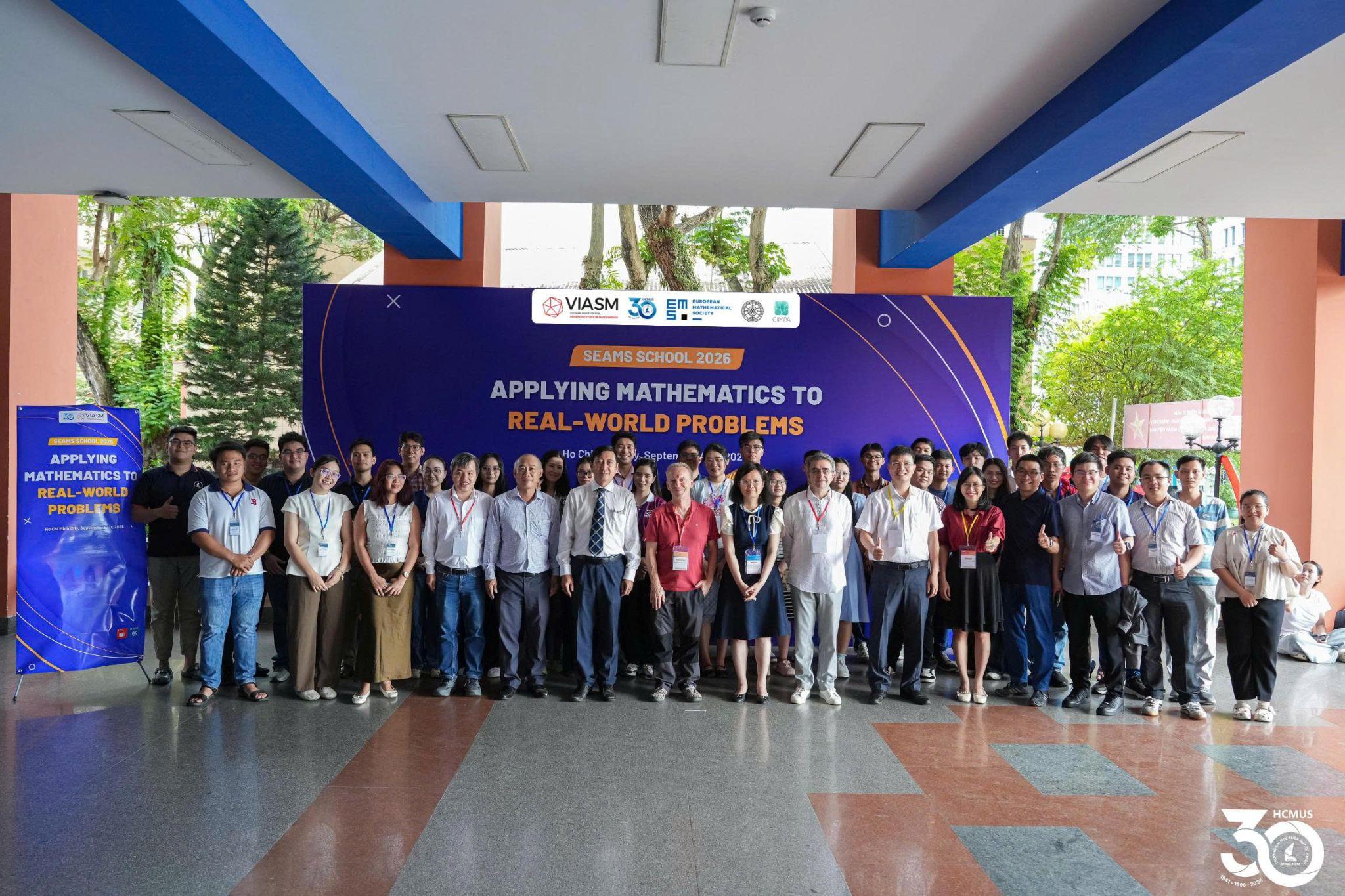 Organizing Committee, lecturers, and SEAMS School 2026 participants
The School brings together mathematicians, lecturers, researchers, graduate students, PhD candidates, and students from Vietnam as well as countries in Southeast Asia, including Cambodia, Thailand, the Philippines, and Indonesia. The participation of researchers and students from different backgrounds and countries creates a diverse academic environment for exchange and provides opportunities for new research connections within the region.
At the opening ceremony, Assoc. Prof. Dr. Tran Le Quan, President of the University of Science, VNUHCM, welcomed the international experts, lecturers, researchers, and participants attending the School. He highlighted the important role of mathematics in identifying, modeling, and solving real-world problems, and expressed his hope that the School would contribute to strengthening connections between mathematics and various fields of application while promoting academic cooperation in Southeast Asia.
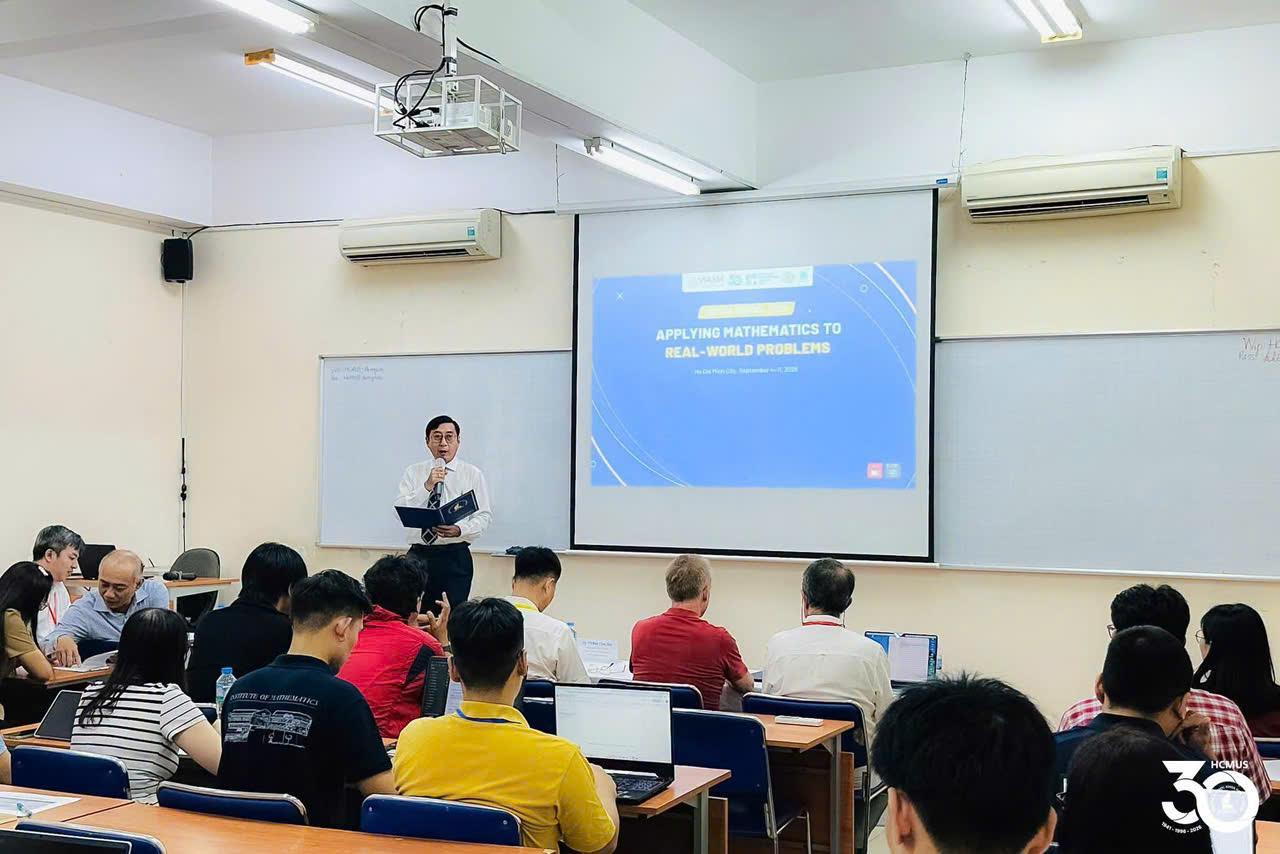 Assoc. Prof. Trần Lê Quan speaking at the opening ceremony of the SEAMS School 2026
The School features four international experts as lecturers: Joaquim M. C. Correia from the University of Évora, Portugal; Timothy G. Myers from the Centre de Recerca Matemàtica, Spain; Lê Thị Minh Thảo from the Center for Computational and Stochastic Mathematics, Instituto Superior Técnico, Portugal; and Gael Raoul from the Centre de Mathématiques Appliquées, École Polytechnique, France
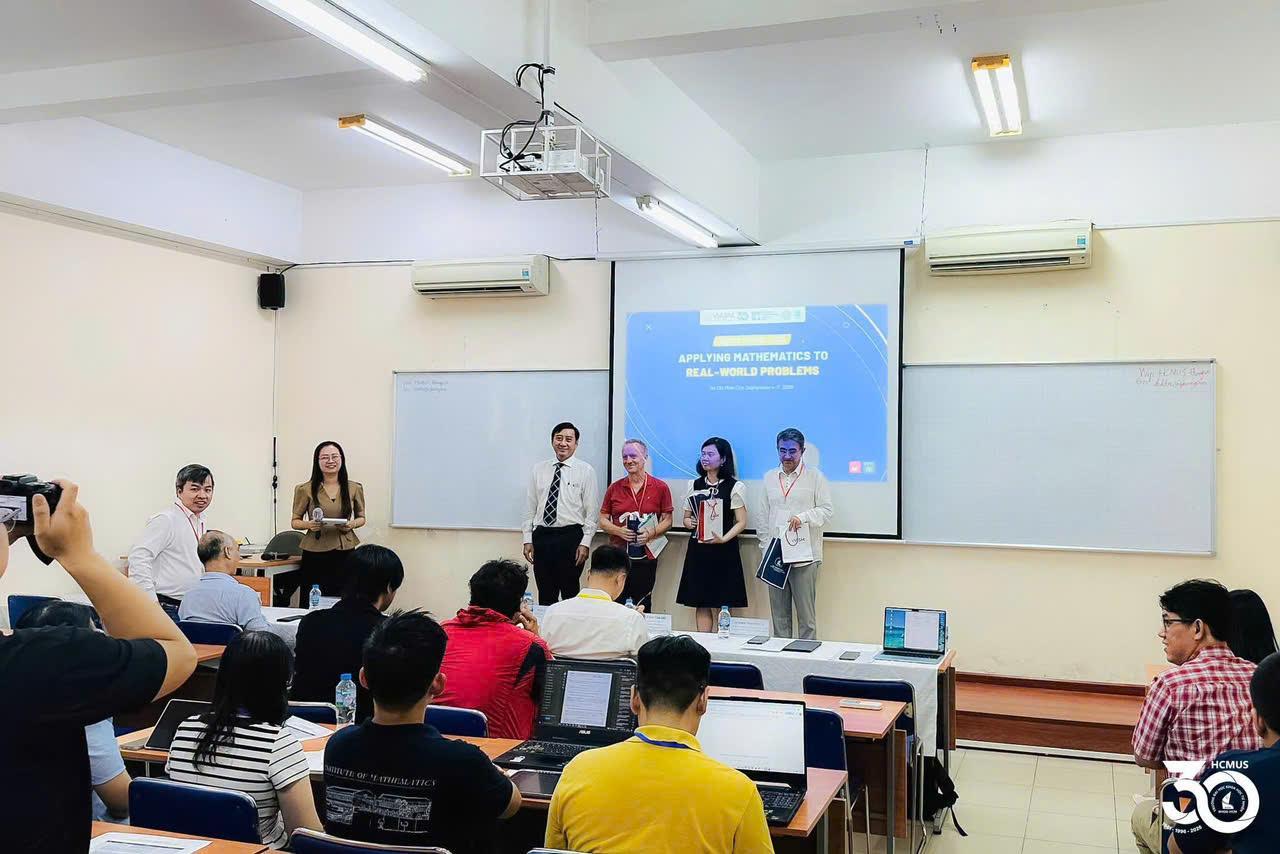 Assoc. Prof. Tran Le Quan presenting souvenirs to SEAMS School 2026 lecturers
From mathematical modeling to real-world problems
The academic program focuses on mathematical methods and tools for identifying, formulating, modeling, analyzing, and solving real-world problems. The topics are approached through a combination of mathematical theory, modeling, numerical methods, scientific computing, and simulation, providing participants with a broader understanding of how mathematics can contribute to addressing practical challenges
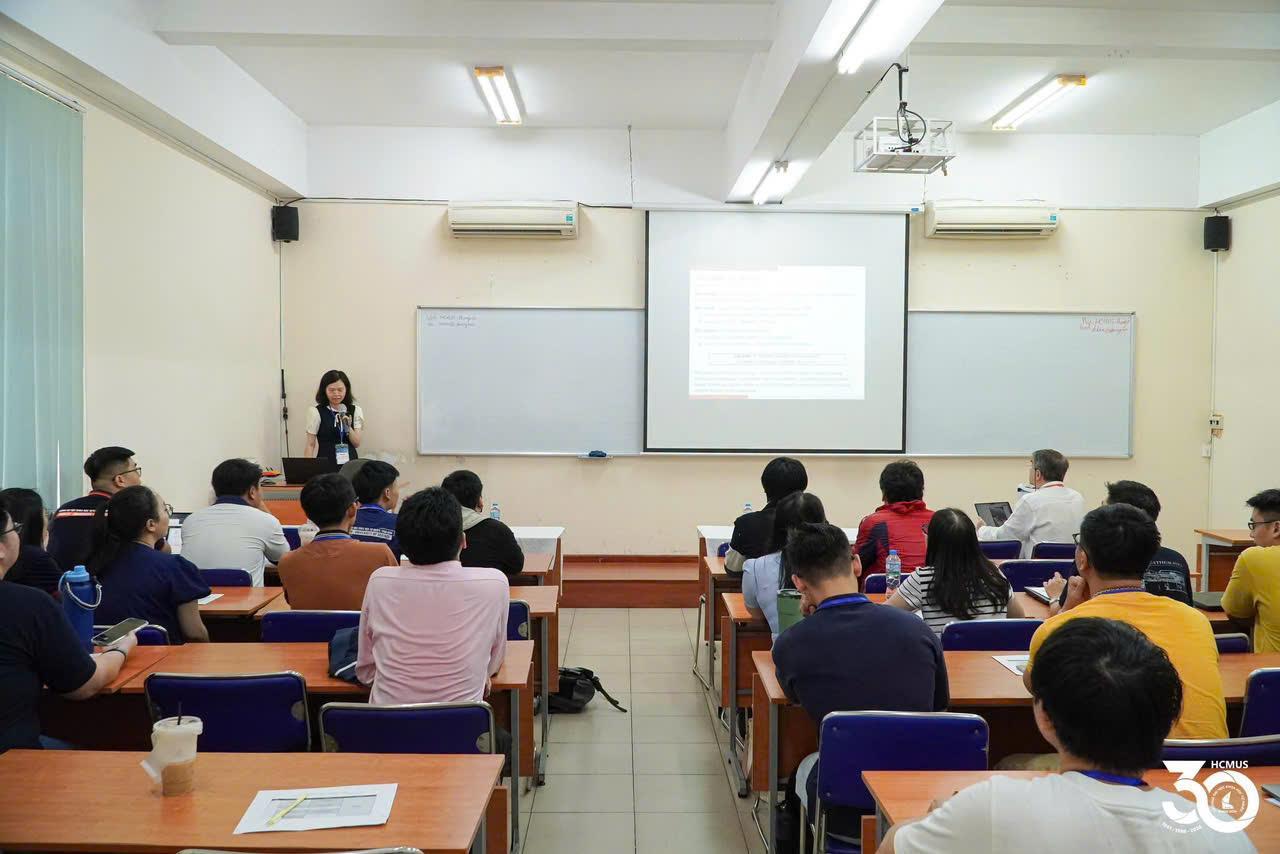 Dr. Le Thi Minh Thao lecturing at SEAMS School 2026
Course 1 – Thi Minh Thao Lê (Instituto Superior Técnico, Portugal), “Modeling and Data-Driven Inference in Infectious Disease”: The course presents an integrated framework for modeling infection dynamics, linking coinfection SIS models, replicator equations, and data-driven inference methods. It covers applications to Streptococcus pneumoniae and Escherichia coli, and the use of machine learning and multi-objective optimization to predict relative fitness and design strategies to reduce antimicrobial resistance in microbiomes.
Course 2 – Timothy G. Myers (Centre de Recerca Matemàtica, Spain), “Practical Applications of Moving Boundary Problems”: Moving boundary problems are a class of problems where the domain changes with time and is initially unknown, so it must be determined as part of the solution. Starting from the basic formulation, the course develops modelling techniques and applies them to problems of current industrial interest such as phase change, crystal growth, artery clogging, and pollutant transport.
Course 3 – Joaquim M. C. Correia (Universidade de Évora, Portugal), “Modelling with Hyperbolic Systems of Conservation Laws”: Real-world problems motivate the theory of hyperbolic systems of conservation laws, drawing on examples from European Study Groups with Industry (ESGI). Topics include Euler’s compressible gas dynamics (shock waves, the Rankine–Hugoniot condition, hyperbolicity and entropy criteria), pollutant effects on stone monuments, and image processing via nonlinear diffusions.
Course 4 – Gaël Raoul (CMAP, École Polytechnique, France), “Wasserstein Distances and Convergence of Stochastic Processes”: The course introduces Wasserstein distances and their use in studying the convergence of stochastic processes. From the basic ideas of optimal transport and coupling, it presents Wasserstein contraction estimates that give quantitative convergence to equilibrium for Markov processes and some partial differential equations, with examples from machine learning and biology.
Alongside the courses, the School featured two invited talks broadening its scope toward applied and industrial mathematics. The first, by Dr. Manh Hung Le (Faculty of Mathematics and Computer Science, University of Science, VNU-HCM), “Why Accelerate? From Gradient Descent to FISTA and Image Restoration”, traced the development of accelerated first-order optimization methods and their role in large-scale image restoration. The second, by Dr. Phuc-Loi Luu (Institute for Applied Research in Health Sciences and Aging, Thong Nhat Hospital, Ho Chi Minh City), “Mathematical and Computational Innovations in Clinical Genomics”, illustrated how distinct branches of mathematics are integrated to solve real-world clinical problems.
Group work and round-table discussions provided participants with opportunities to engage directly with experts and exchange ideas on approaches to applied problems and their solutions. These activities also allowed participants to share research experiences, expand their academic networks, and explore potential avenues for future collaboration.
As part of the School, the “Study Groups with Industry” model was introduced and piloted with the aim of developing an industry-connected applied mathematics research group at the Department of Mathematics and Computer Science, University of Science, VNU-HCM. The model brings mathematicians together with industry and application partners, turning real-world challenges into starting points for research problems while strengthening the transfer of mathematical research into practice.
This activity is in line with the objectives of the National Program for the Development of Mathematics for the 2021–2030 period, which emphasizes strengthening the links between mathematics, science, technology, and everyday life, while creating opportunities for young researchers to engage with modern and application-oriented areas of mathematical research.
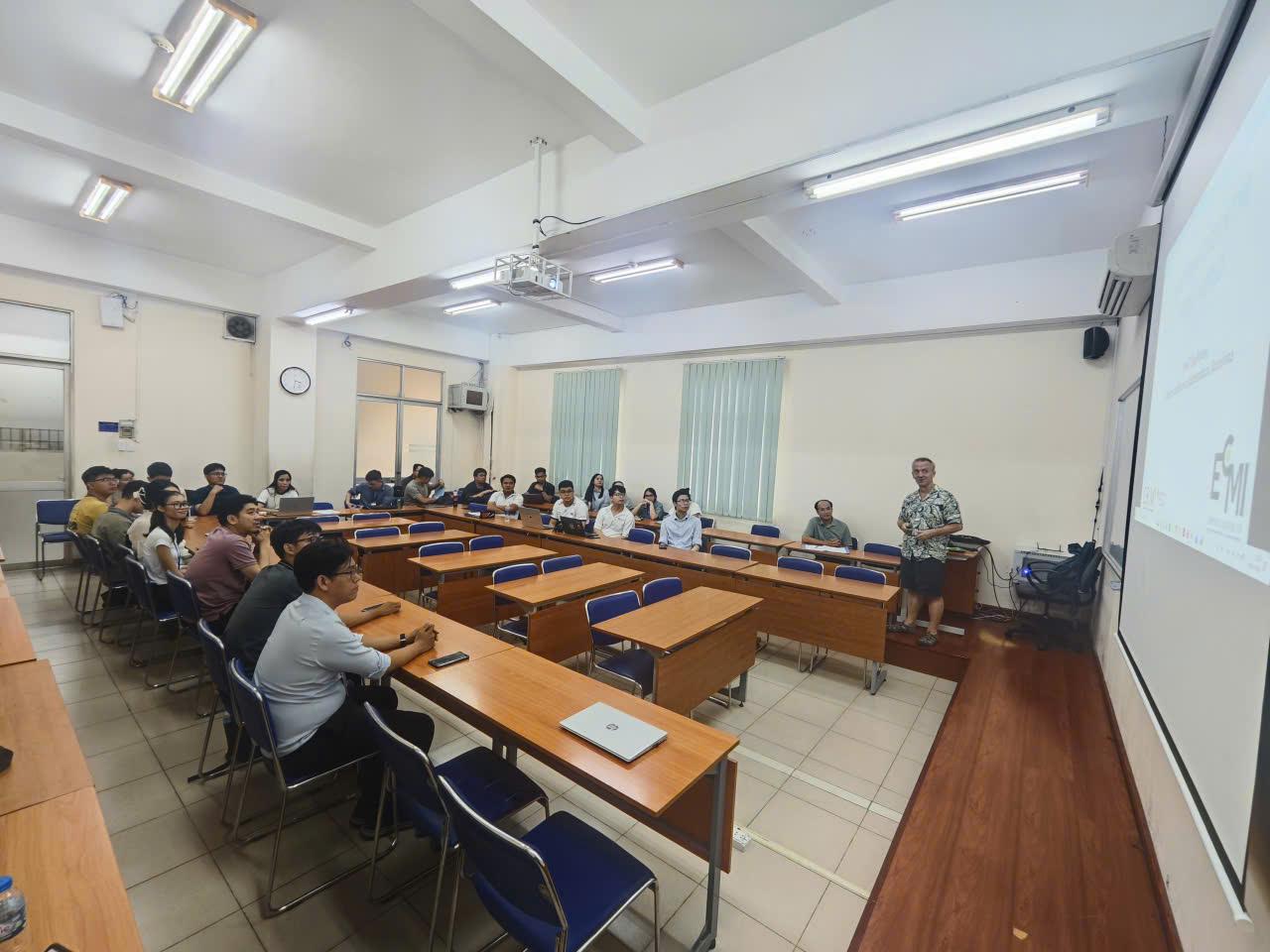 Prof. Tim Myers presenting the “Study Groups” model during a round-table discussion at SEAMS School 2026
Mini-projects were carried out throughout the School. Participants worked in groups, selected topics related to the course content, and jointly developed, analyzed, and addressed the problems under the guidance of the lecturers. On September 11, the groups presented their project results, sharing their approaches, findings, and open questions. The activity gave participants an opportunity to apply the knowledge they had acquired to specific problems and to discuss their research results directly with the lecturers and other participants.
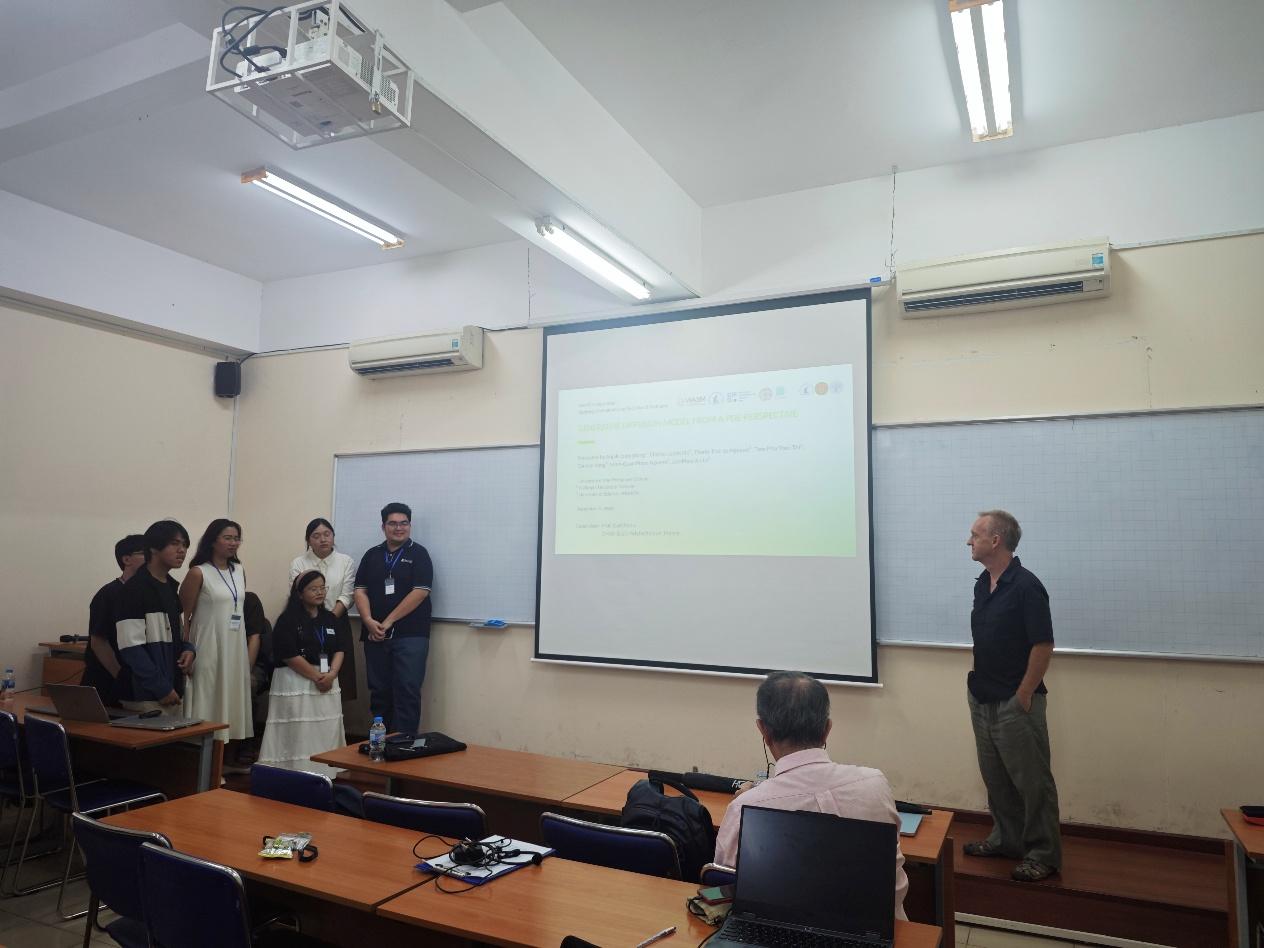
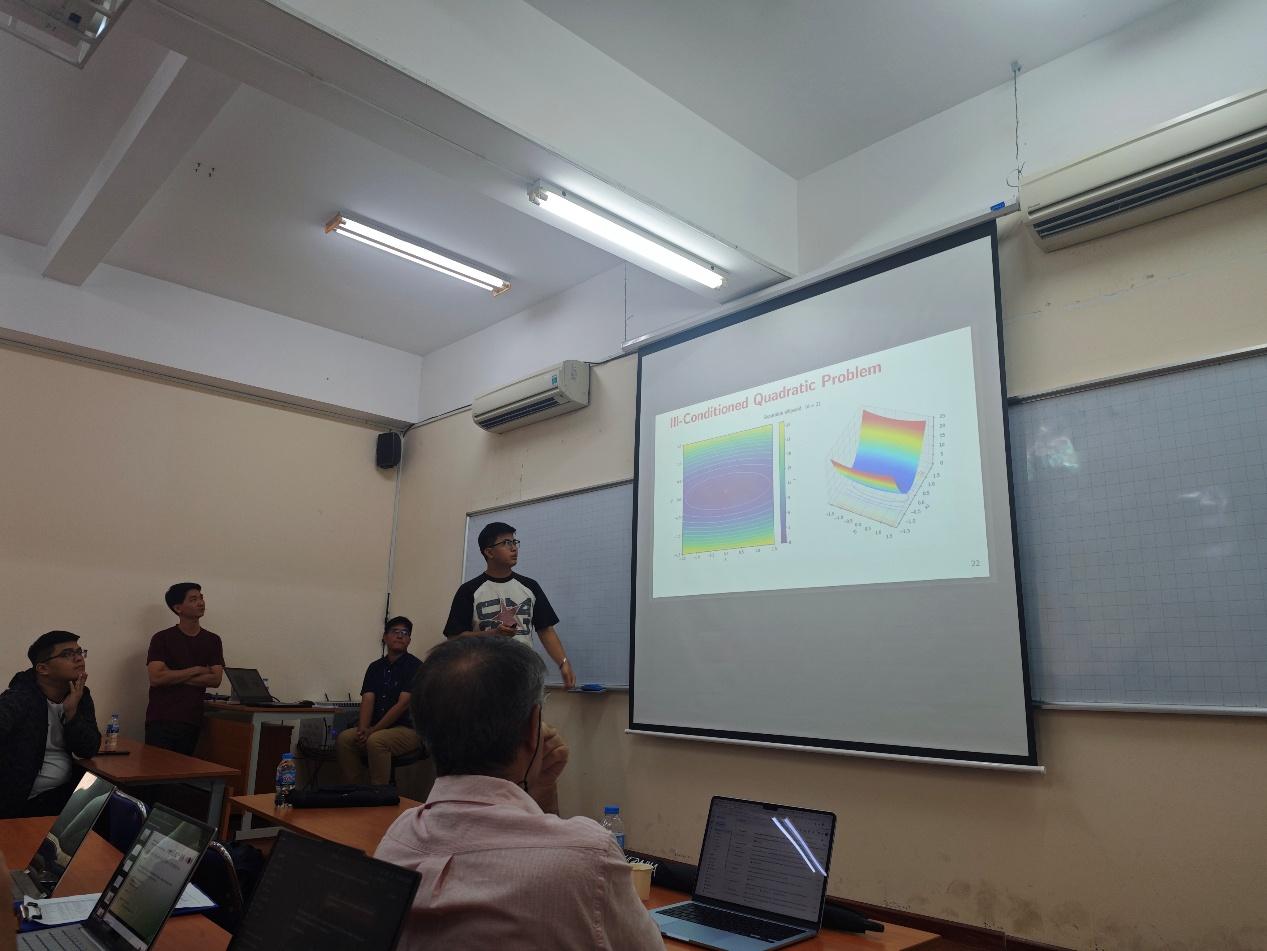 Mini-project presentations at SEAMS School 2026
In addition to the academic activities, SEAMS 2026 also provided international participants with opportunities to learn about Vietnamese culture, people, and everyday life through social and cultural activities held alongside the School. On the evening of September 10, the Organizing Committee hosted a Gala Dinner attended by the lecturers and participants. In a warm and informal setting, participants had the opportunity to meet and interact with one another, share their experiences during the School, and learn more about the cultures and people of other Southeast Asian countries.
These social activities helped create a friendly environment for participants and lecturers from different countries to connect beyond the academic program. For international participants, they also offered memorable experiences of Vietnam alongside the academic learning and professional exchanges at the School.
Promoting Mathematical Collaboration in Southeast Asia
SEAMS School 2026 was not only an academic training and exchange program, but also contributed to strengthening the network of collaboration in applied mathematics across Southeast Asia. The participation of international experts, researchers, lecturers, and students from different countries created opportunities to share experiences, foster research connections, and expand collaboration among mathematical institutions in the region.
SEAMS School 2026 received support from the International Centre for Pure and Applied Mathematics (CIMPA), the Southeast Asian Mathematical Society (SEAMS), and the European Mathematical Society – Committee for Developing Countries (EMS CDC). The support of these international organizations played an important role in providing researchers, lecturers, and students in the region with opportunities to meet, exchange ideas, and develop research directions in mathematics addressing real-world problems.
Through its academic and social activities, SEAMS School 2026 contributed to promoting applied mathematics, strengthening the links between mathematical research and real-world needs, and creating new foundations for academic collaboration between Vietnam and other Southeast Asian countries.
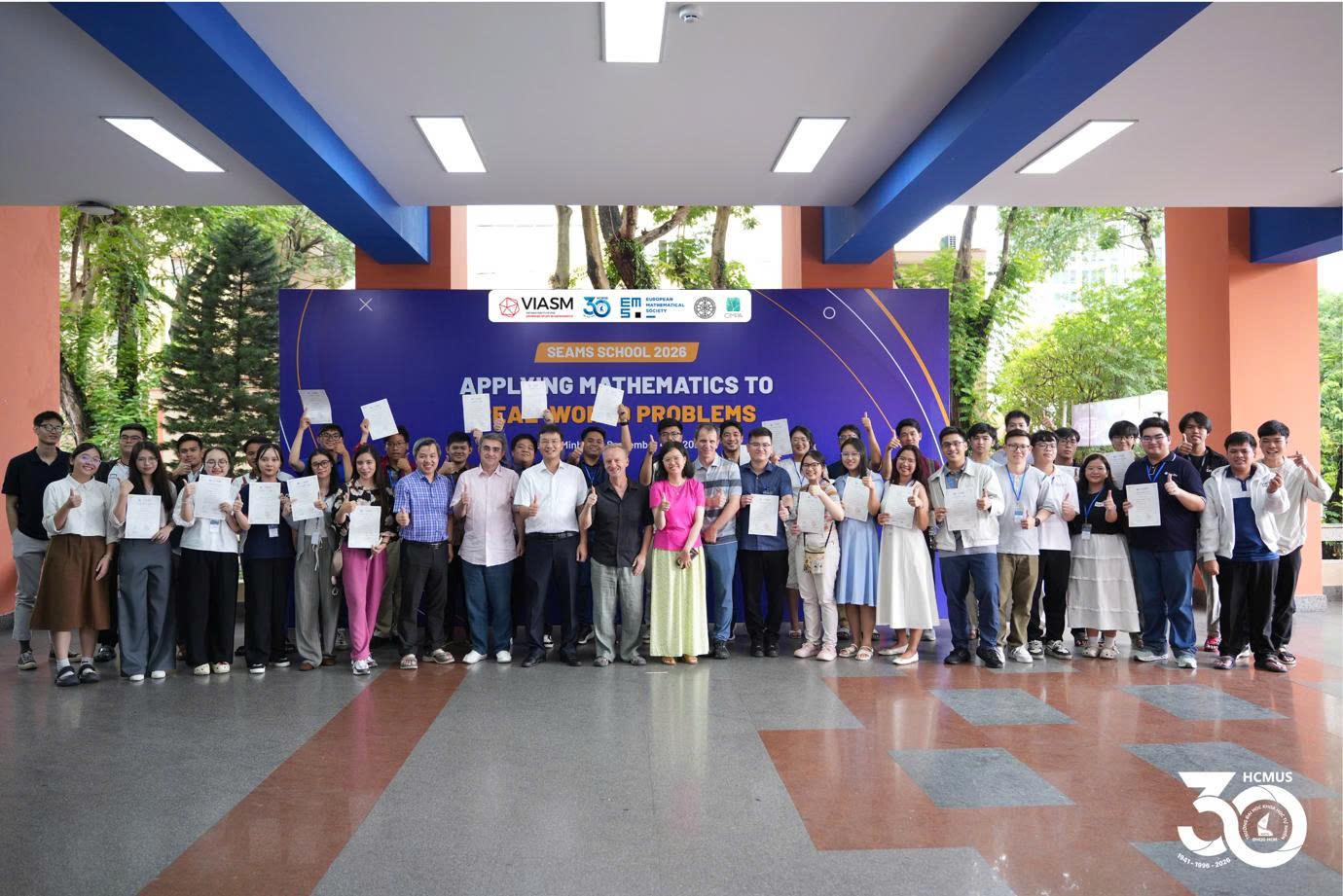 Closing Ceremony of SEAMS School 2026
Some highlights from SEAMS School 2026: 09.2026. SEAMS School 2026